畏敬のかたち、或いは喚起の振る舞い|From of Reverence, or Arousing Behavior.
《畏敬のかたち、或いは喚起の振る舞い|From of Reverence, or Arousing Behavior.》
Installation view at the Kyoto City KYOCERA Museum of Art
京都市京セラ美術館開館1周年記念展 コレクションとの対話:6つの部屋|Kyoto City KYOCERA Museum of Art 1st Anniversary Exhibition-Dialogues with the Collection: 6 Rooms
2021/10/9-2021/12/5
京都市京セラ美術館開館1周年記念展『コレクションとの対話―6つの部屋』のために制作された、映像および音声による3つの作品。本展『コレクションとの対話―6つの部屋』は、ジャンルや時代を超えたスペシャリストが異なるアプローチでコレクションと“対話”し、作品にまつわる秘められた歴史や物語を引き出す展覧会である。本展の展示構成は6室からなり、竹内勝太郎(学芸職員・詩人)、加藤一雄(学芸職員・文筆家)、アンドレ・ロート(画家)、青木淳(建築家・当館館長)、宮永愛子(現代美術家)、ひろいのぶこ(繊維造形作家)、髙橋耕平(現代美術家)が参加した。髙橋の作品は最後の部屋、6つ目に位置する。私は提示されたコレクションを手掛かりに、主に2つのアプローチを行い、合計3つの作品を展示した。コレクションから直接取り上げた作家は、井田照一(1941–2006)、木村秀樹(1948–)の2名。共にイメージの表面性や“極薄”を意識させる作品である。
1つ目の作品は、《畏敬のかたち、或いは喚起の振る舞い-1》。音声作品である《畏敬のかたち、或いは喚起の振る舞い-1》は、展示空間全体にその音が広がる。1927年から2020年の間に京都市京セラ美術館に収蔵された作品3864点、全ての作品の情報(作品番号、作者名、作品名、制作年、収蔵年、収蔵種:寄贈か購入かについて)を、作家の声で読み上げた音声作品である。合計19時間57分54秒の音声が、半分開いた空っぽの展示ケースから流れ出る。2つ目の作品は、井田照一、木村秀樹に挟まれるかたちで空間の中央に位置する映像作品《畏敬のかたち、或いは喚起の振る舞い-2》。本作は、美術館の中でも注目されにくいジャンルである「版画」に着目したものである。美術館の開館から2020年までに収蔵された全版画作品は606点ある。それら全ての作品タイトルを、作者自身が水筆によって、京都市内のパブリックスペースに描いた。そのパフォーマンスの様子を映像記録したものが本作であり、映像は合計7時間8分49秒に及ぶ。本作は映像作品であるが、その投影手法、展示手法は、井田照一と木村秀樹が作品制作を通して実践してきた現代版画の概念を具現化している。井田と木村はテーマや技法こそ異なるが、両者が版画作品の制作において意識したもののひとつに、イメージが定着する紙の薄さ、イメージの実体であるインクの薄さ、そしてイメージの定着のあり方がある。本作は、井田・木村作品の間に透過性のある極薄のスクリーンを吊るし、映像を表と裏から鑑賞することができるようにしている。イメージを裏から見る際にはパフォーマンスの行為性が、表から見る際には書き記されたタイトルの意味性が前景化する。3つ目の作品《畏敬のかたち、或いは喚起の振る舞い-3》は、2つ目の作品と緩やかに連携する。版画作品606点の作品タイトルを微細な声で作者自身が発話し、それを録音した音声が、壁に設置された厚みのあるパネルから再生される。
美術館に収蔵された作品は、普段は収蔵庫に鎮座している。時に展示室に移動し、一定期間展示され、また収蔵庫に戻る。時に別の地域や国、美術館に出張することもある。しかし、収蔵庫にとどまったままで展示室に姿を現したことのない作品もある。市民はおろか、学芸員ですら全てを実見することは難しい。《畏敬のかたち、或いは喚起の振る舞い》には、2つのアプローチがある。ひとつは、収蔵庫の作品たちを呼び起こす行為である。収蔵庫に鎮座している、あるいは長い間動かず眠っているかもしれない作品の名前を呼ぶ。もうひとつは、作品たちの名前だけを外に連れ出す行為である。収蔵庫や作品目録の中で管理された作品名。公的機関で管理された作品を、水筆で描く行為によって一時的に公共空間に連れ出す。ここに集まった作品群に畏敬の念を抱きながら、作品ひとつひとつを喚起する。その振る舞いを作品とした。
Three works incorporating video and sound, created for Dialogue with the Collection: Six Rooms, an exhibition commemorating the first anniversary of the Kyoto City KYOCERA Museum of Art. The exhibition brought together specialists from across different fields and periods, each engaging in a different form of “dialogue” with the museum’s collection in order to draw out histories and narratives embedded within the works. Organized into six rooms, the exhibition featured Katsutaro Takeuchi (museum staff member and poet), Kazuo Kato (museum staff member and writer), André Lhote (painter), Jun Aoki (architect and director of the museum), Aiko Miyanaga (contemporary artist), Nobuko Hiroi (fiber artist), and Kohei Takahashi (contemporary artist). Takahashi’s works occupied the sixth and final room.
Taking the collection presented to me as a point of departure, I developed two principal approaches and presented a total of three works. From the collection, I focused directly on works by Teruichi Ida (1941–2006) and Hideki Kimura (1948–), both of whose practices draw attention to the surface of the image and to an extreme thinness.
The first work, From of Reverence, or Arousing Behavior -1, is a sound work that permeates the entire exhibition space. In my own voice, I read aloud information on all 3,864 works acquired by the Kyoto City KYOCERA Museum of Art between 1927 and 2020: accession number, artist’s name, title, year of production, year of acquisition, and method of acquisition—whether by donation or purchase. The recording, with a total duration of 19 hours, 57 minutes, and 54 seconds, emanates from an empty display case left half open.
The second work, From of Reverence, or Arousing Behavior -2, is a video installation positioned at the center of the space, between works by Teruichi Ida and Hideki Kimura. It focuses on printmaking, a genre that tends to receive relatively little attention within museums. A total of 606 prints entered the museum’s collection between its opening and 2020. Using a water brush, I wrote the titles of every one of these works in public spaces throughout Kyoto. The work is a video record of this performance, with a total duration of 7 hours, 8 minutes, and 49 seconds.
Although this is a video work, its methods of projection and display embody ideas of contemporary printmaking explored by Ida and Kimura through their respective practices. While their themes and techniques differ, both artists engaged with the thinness of the paper onto which an image is fixed, the thinness of the ink that constitutes the material substance of that image, and the very manner in which an image becomes fixed to a surface. In this work, an extremely thin, translucent screen is suspended between works by Ida and Kimura, allowing the projected image to be viewed from both front and back. Seen from behind, the performative act comes to the foreground; seen from the front, the meaning of the written titles becomes more prominent.
The third work, From of Reverence, or Arousing Behavior -3, is loosely connected to the second. In a barely audible voice, I speak the titles of all 606 prints. The resulting recording is played from within a thick panel installed on the wall.
Works held in a museum collection ordinarily remain in storage. At times they are moved into the galleries, exhibited for a certain period, and then returned to storage. At other times they travel to another region, another country, or another museum. Yet some works remain in storage without ever appearing in an exhibition gallery. It is difficult for members of the public—and even for curators—to encounter every work in the collection firsthand.
From of Reverence, or Arousing Behavior takes two approaches. The first is an act of calling forth the works held in storage: calling the names of works that remain there, perhaps having lain dormant and unmoving for many years. The second is an act of taking only their names outside. These are the names of works administered within museum storage and collection catalogues. Through the act of writing them with a water brush, the names of works held and administered by a public institution are temporarily carried out into public space.
With a sense of reverence for the body of works gathered within the collection, I call each one forth, one by one. The work lies in the gesture itself.
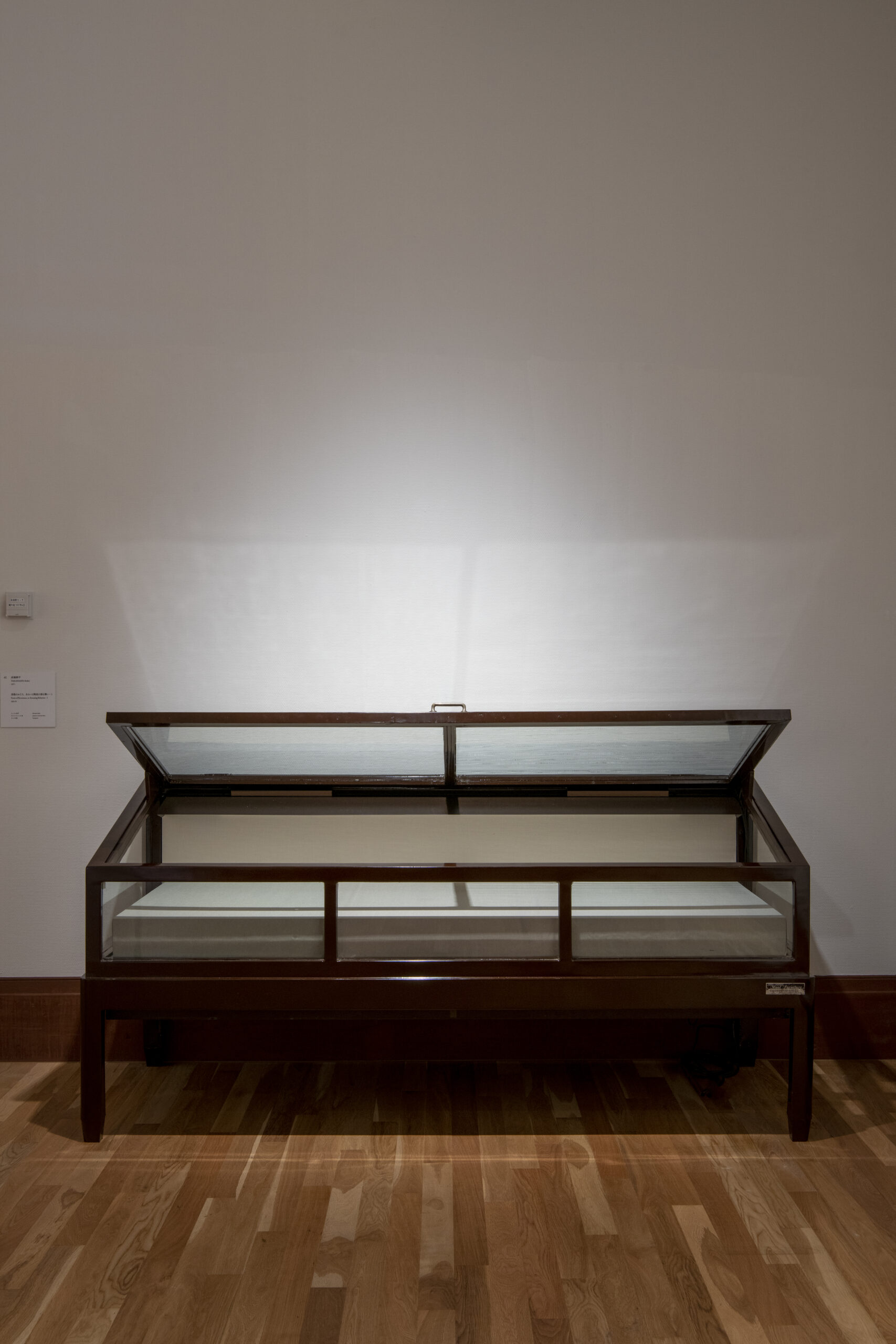 髙橋耕平《畏敬のかたち、或いは喚起の振る舞い-1》2021年|モノラル音声(19時間57分54秒),ポリエステル,木,他|サイズ可変
Takahashi Kohei《From of Reverence, or Arousing Behavior-1》2021 | Mono audio (19 h 57 min 54 sec), polyester, wood, and other materials | Dimensions variable
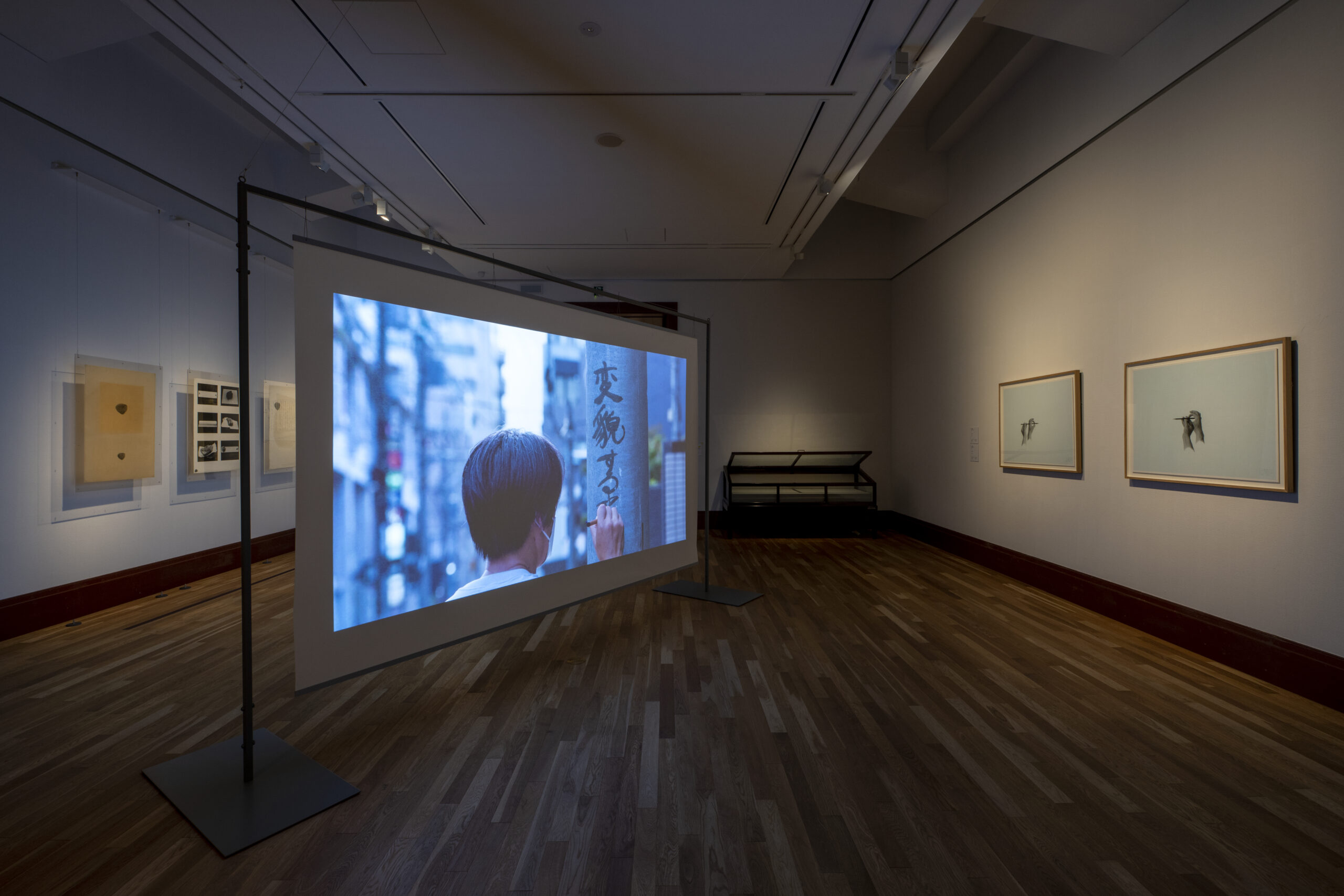 髙橋耕平《畏敬のかたち、或いは喚起の振る舞い-2》2021年|HD VIDEO(7時間8分49秒)リア透過スクリーン、鉄、アルミ、他|2400×3600mm
Takahashi Kohei《From of Reverence, or Arousing Behavior-2》2021|HD video (7 h 8 min 49 sec), rear-projection transparent screen, steel, aluminum, and other materials | 2400 × 3600 mm
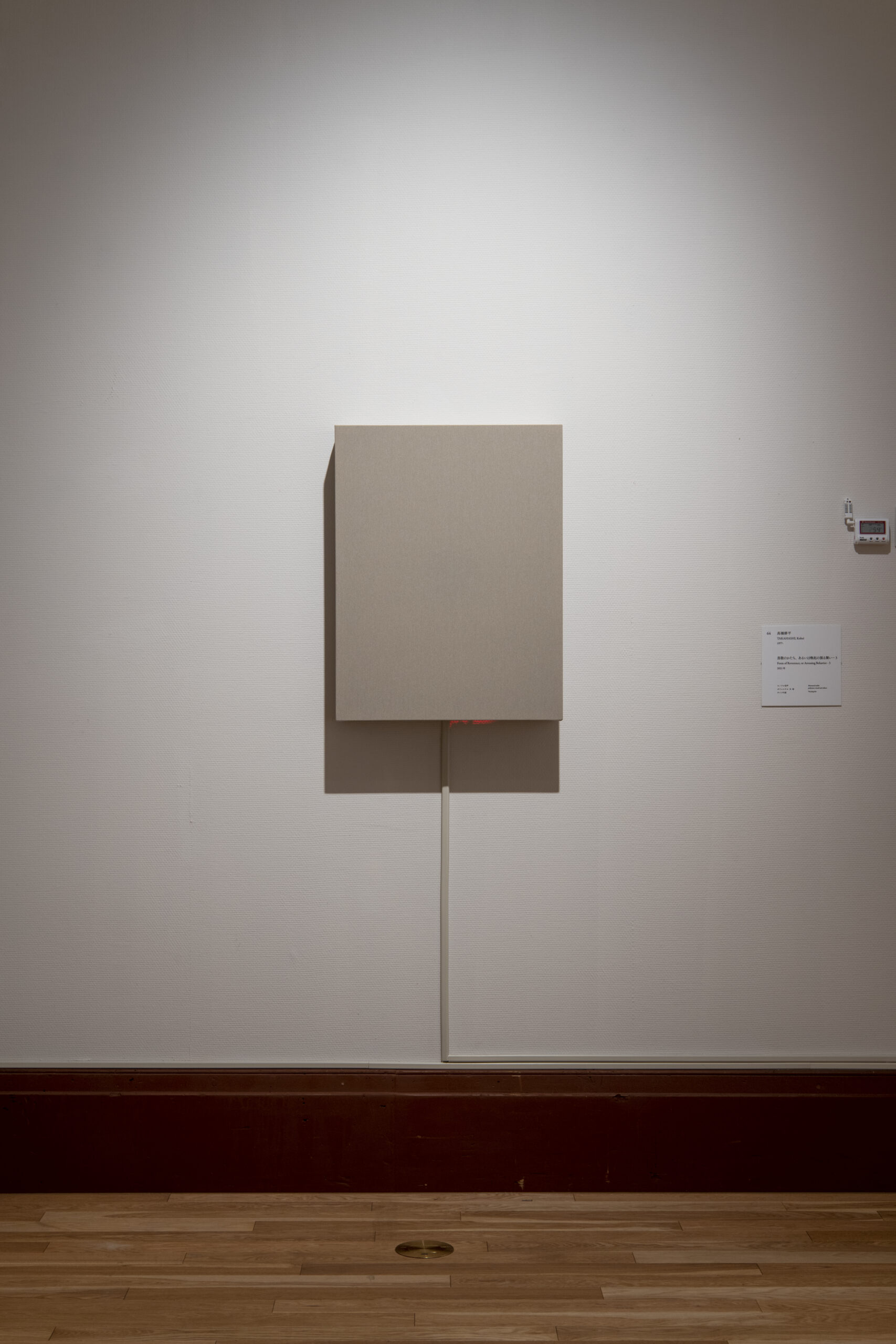 髙橋耕平《畏敬のかたち、或いは喚起の振る舞い-3》2021年|モノラル音声(1時間30分7秒)、ポリエステル、木、他|サイズ可変
Takahashi Kohei《From of Reverence, or Arousing Behavior-3》2021 | Mono audio (1 h 30 min 7 sec), polyester, wood, and other materials | Dimensions variable
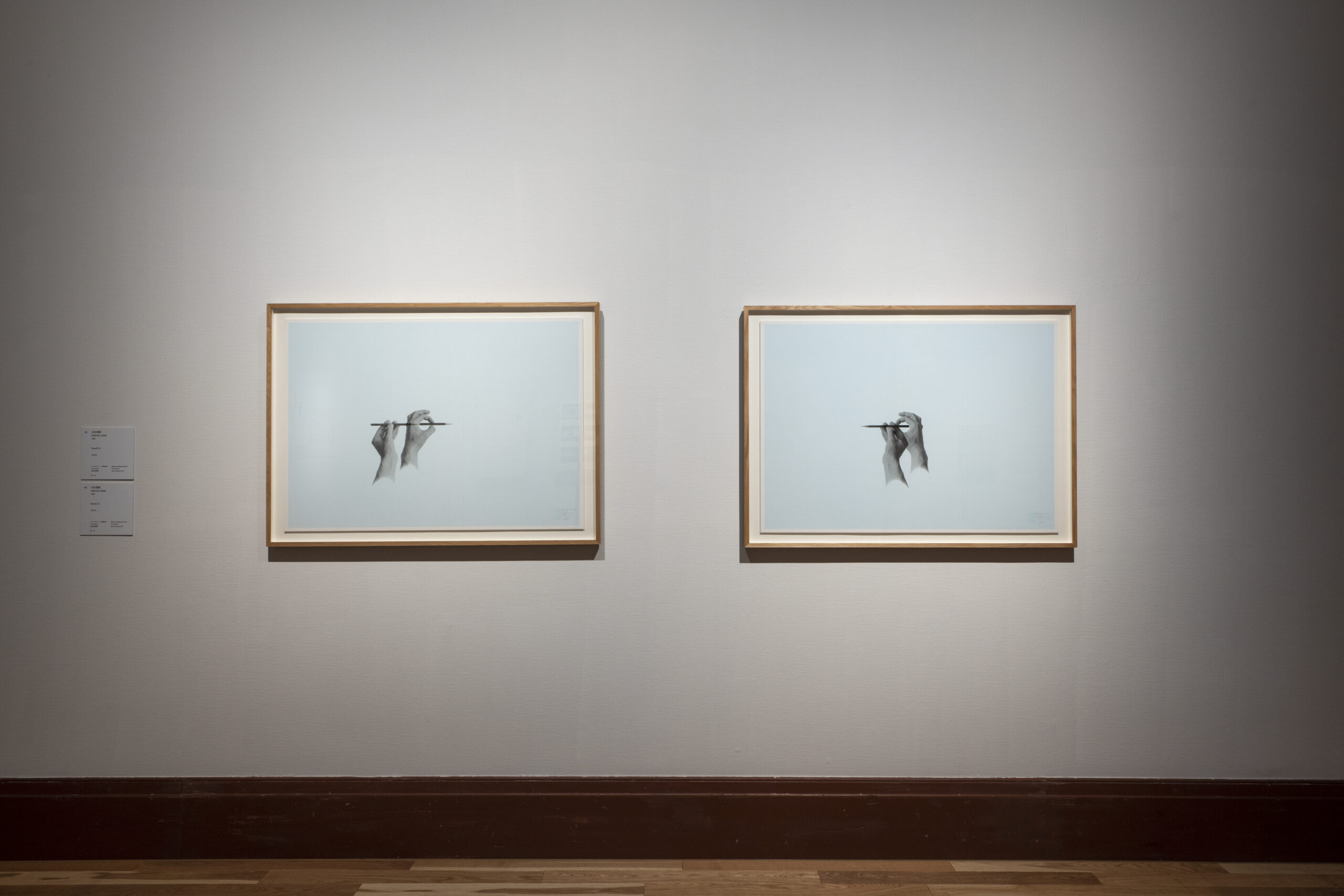 左:木村秀樹《Pencil 2-5》1974年|シルクスクリーン、方眼紙、額|728×103mm|京都市美術館蔵
右:木村秀樹《Pencil 2-3》1974年|シルクスクリーン、方眼紙、額|728×103mm|京都市美術館蔵
Left: Hideki Kimura, Pencil 2-5, 1974 | Silkscreen on graph paper, frame | 728 × 103 mm | Collection of the Kyoto Municipal Museum of Art
Right: Hideki Kimura, Pencil 2-3, 1974 | Silkscreen on graph paper, frame | 728 × 103 mm | Collection of the Kyoto Municipal Museum of Art
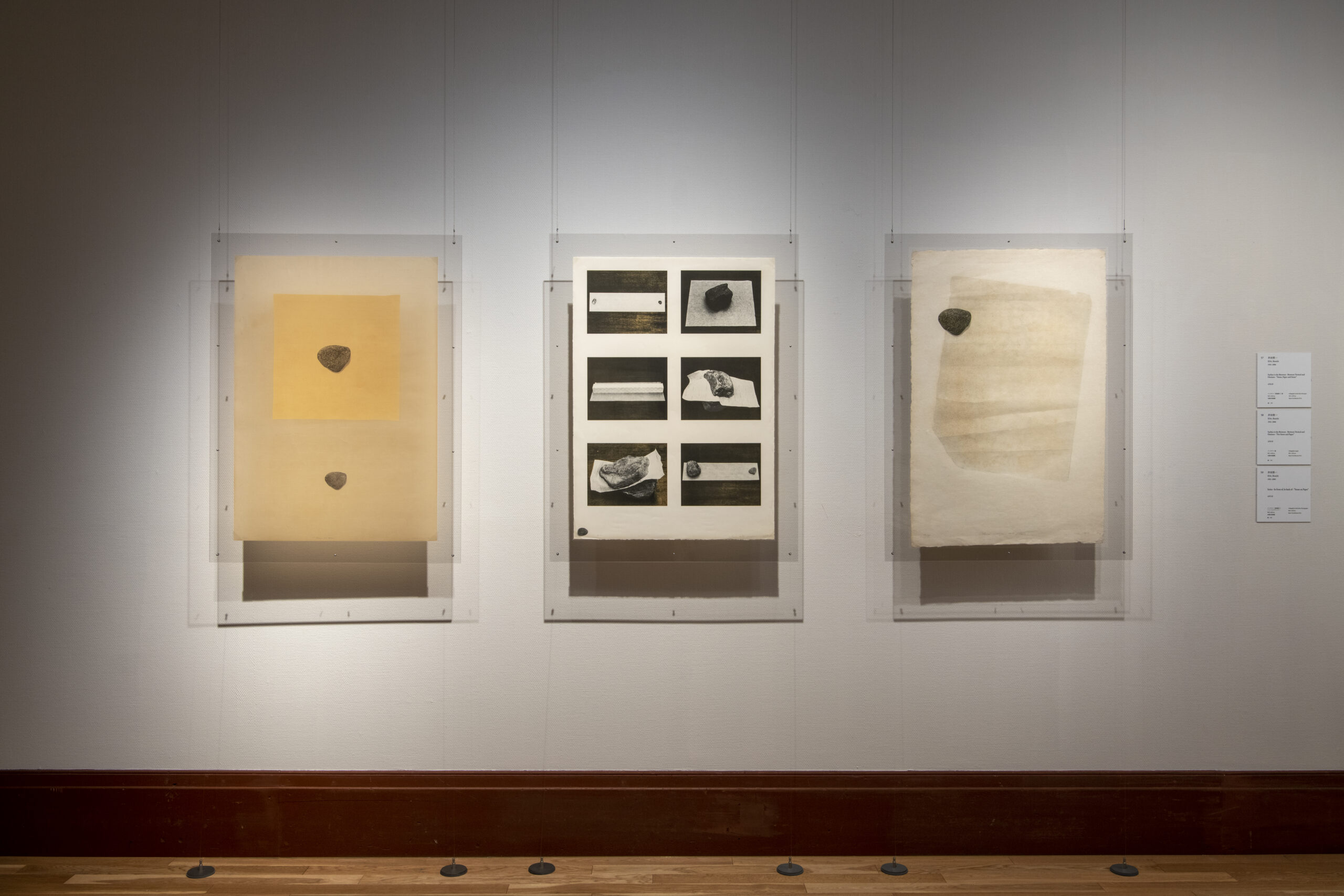 左:井田照一《Series-In frontof, In back of-“Stone on Paper”》1975年|リトグラフ(両面刷り)、トレーシングペーパー|900×640mm|京都市美術館蔵 中:井田照一《Surface is the Between – Between Vertical and Horizo-“For Stone and Paper”》1976年|リトグラフ、紙|895×640mm|京都市美術館蔵 右:井田照一《Surface is the Between – Between Vertical and Horizo-“Stone, Paper and Stone”》1976年|リトグラフ、紙|945×630mm|京都市美術館蔵
Left: Teruichi Ida, Series-In frontof, In back of-“Stone on Paper”, 1975 | Lithograph (printed on both sides), tracing paper | 900 × 640 mm | Collection of the Kyoto Municipal Museum of Art
Center: Teruichi Ida, Surface is the Between – Between Vertical and Horizo-“For Stone and Paper”, 1976 | Lithograph on paper | 895 × 640 mm | Collection of the Kyoto Municipal Museum of Art
Right: Teruichi Ida, Surface is the Between – Between Vertical and Horizo-“Stone, Paper and Stone”, 1976 | Lithograph on paper | 945 × 630 mm | Collection of the Kyoto Municipal Museum of Art


