目の交換、視線の先、彼岸と此処との間を|Exchange of Eyes, Beyond the Gaze, Between the Other Shore and Here
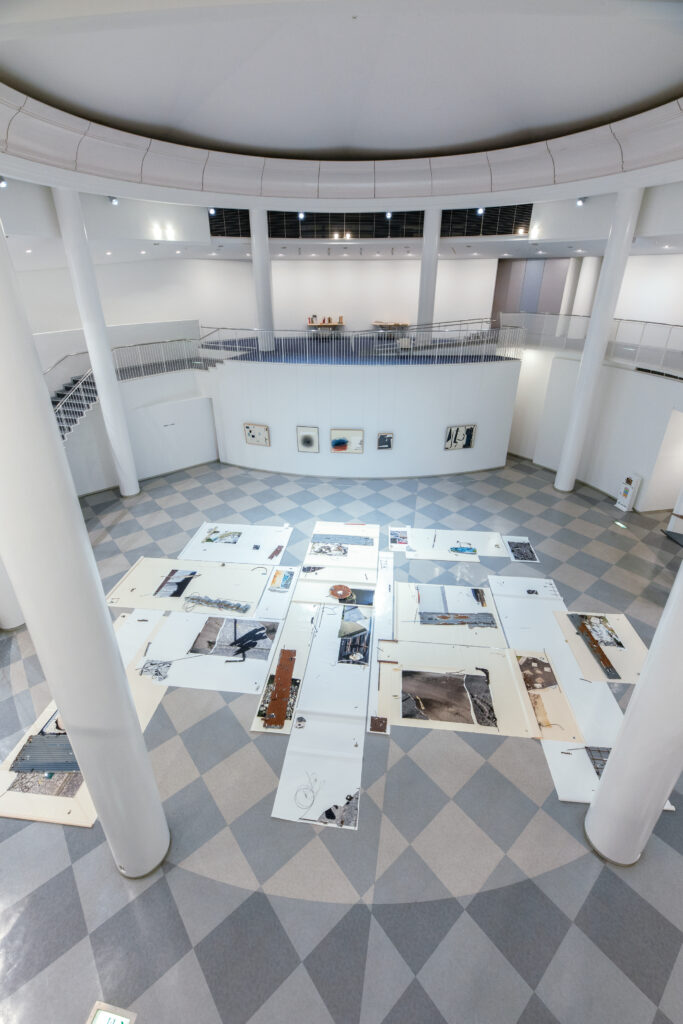
《目の交換、視線の先、彼岸と此処との間を|Exchange of Eyes, Beyond the Gaze, Between the Other Shore and Here》2023
会場:芦屋市立美術博物館|Ashiya City Museum of Art and History
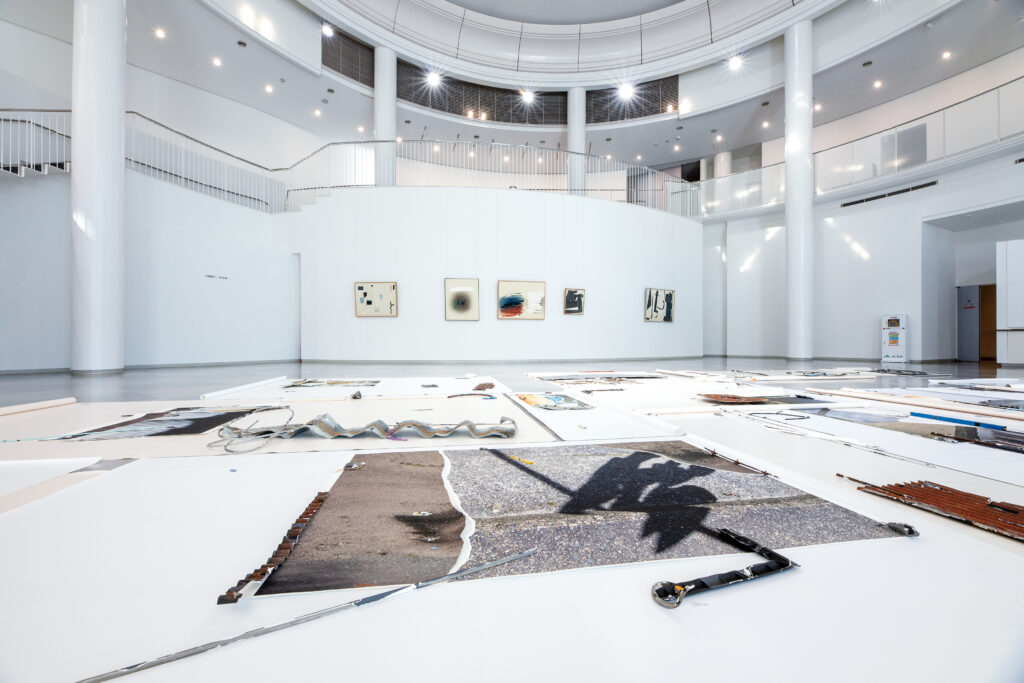
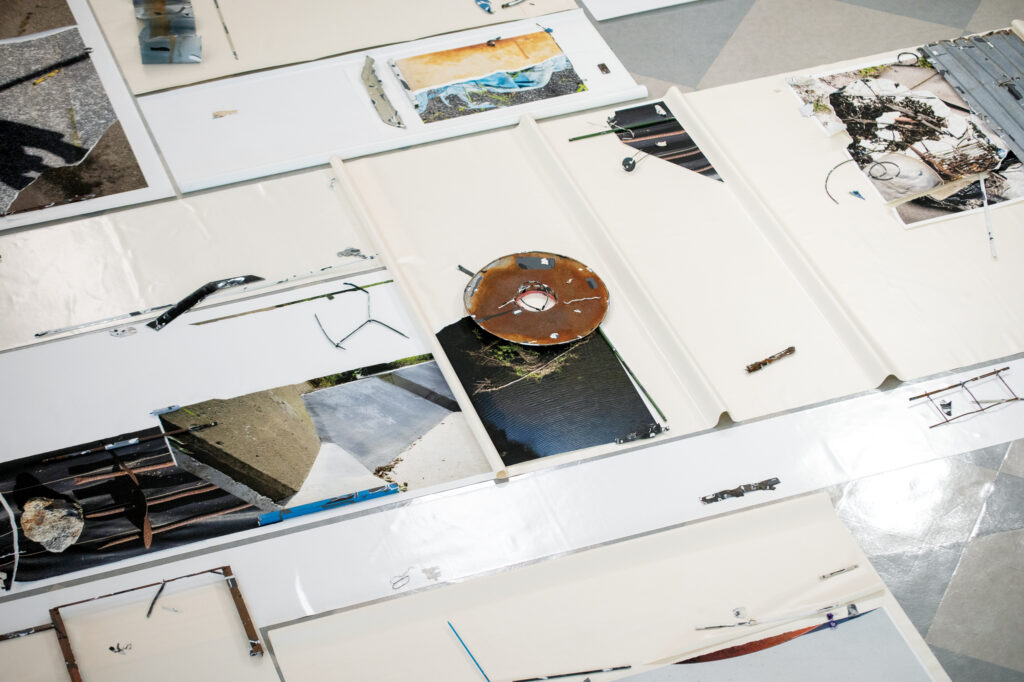
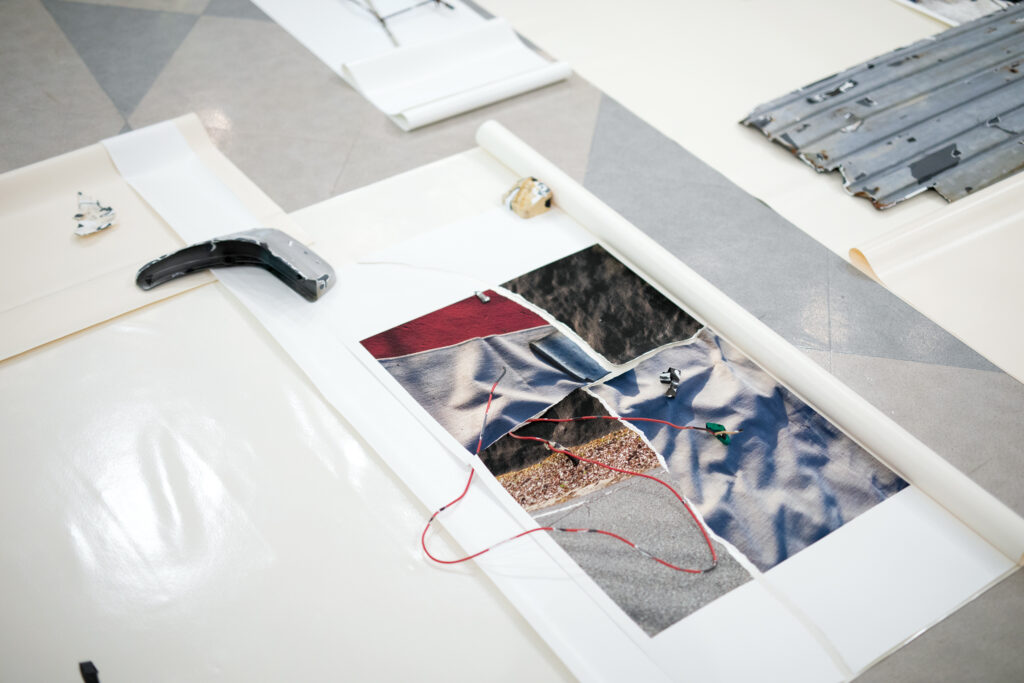
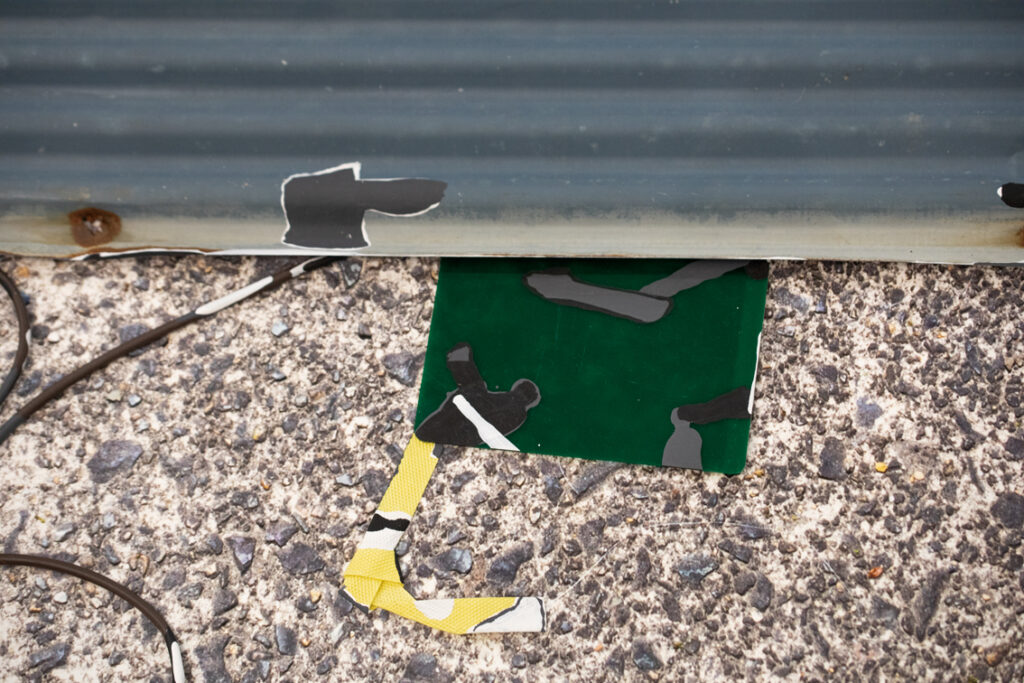
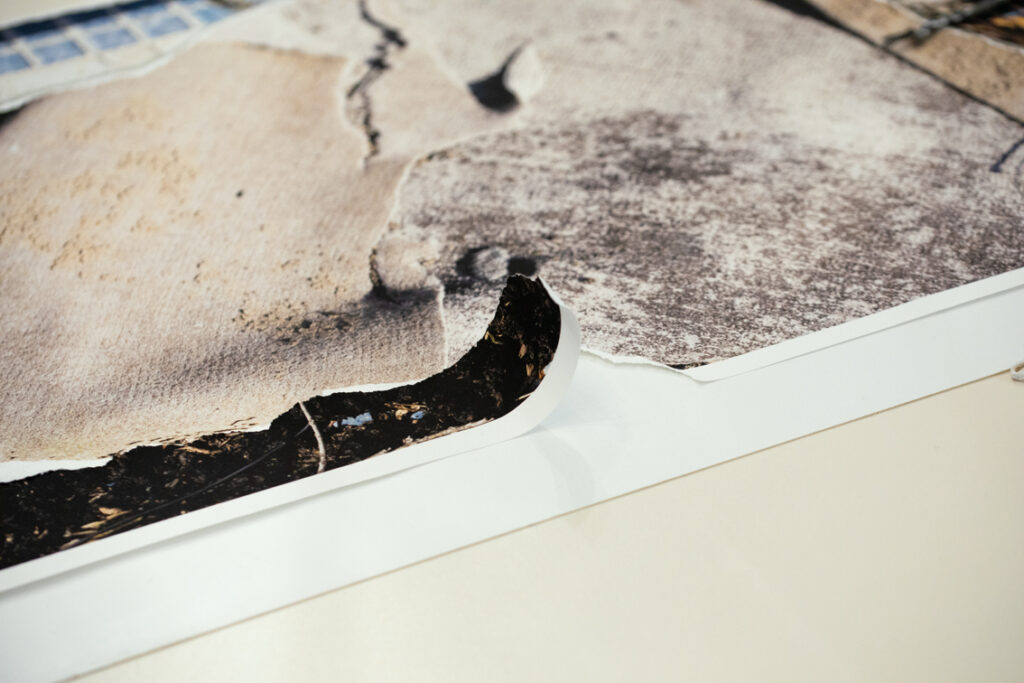
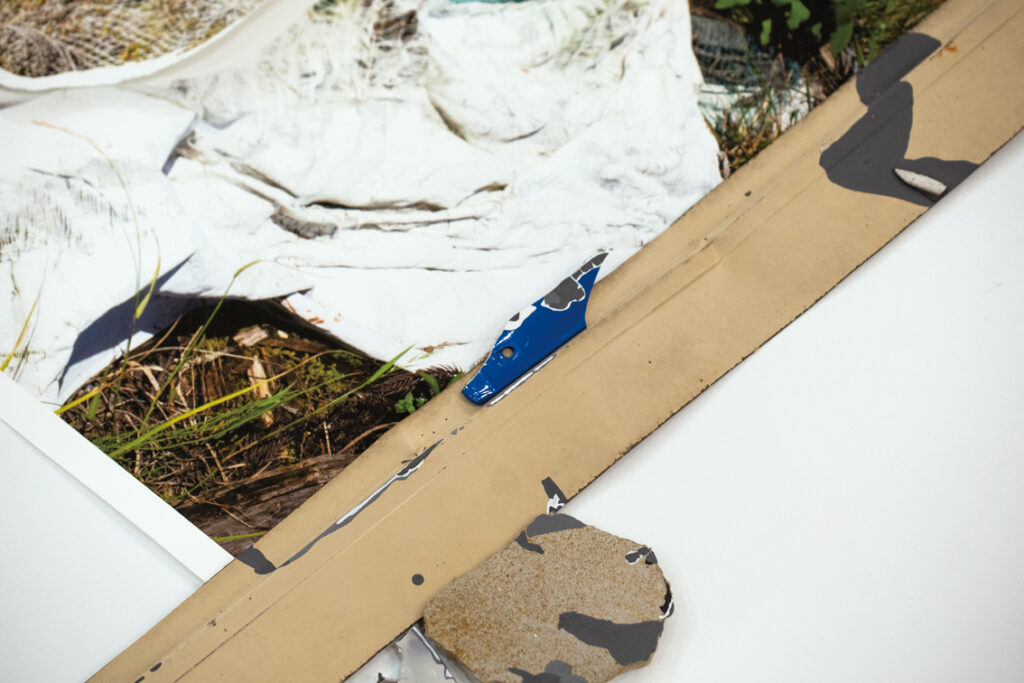
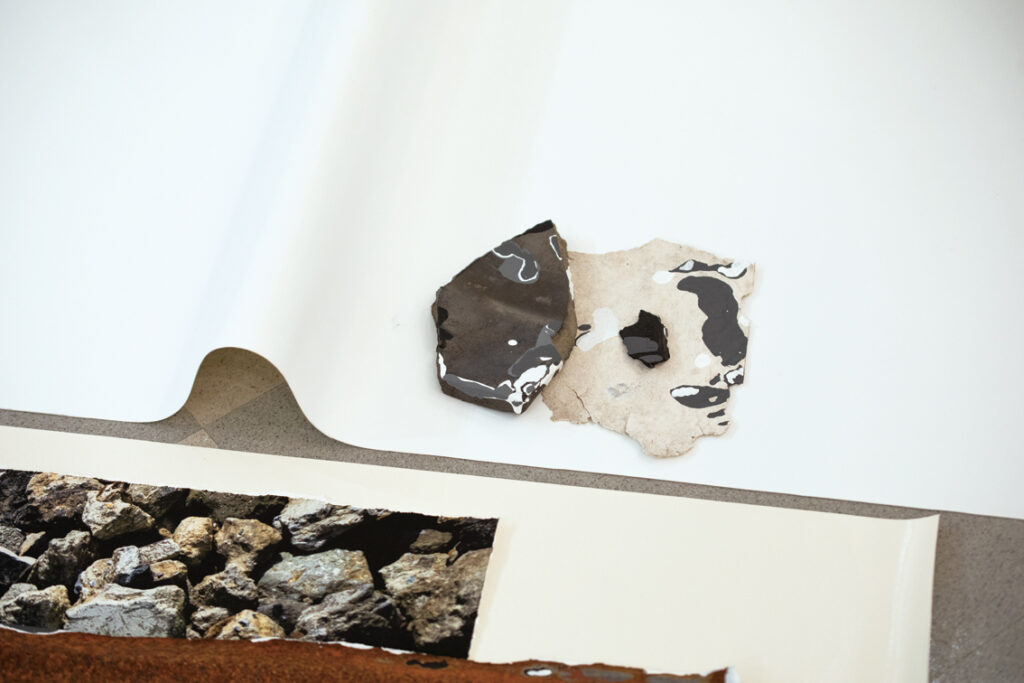
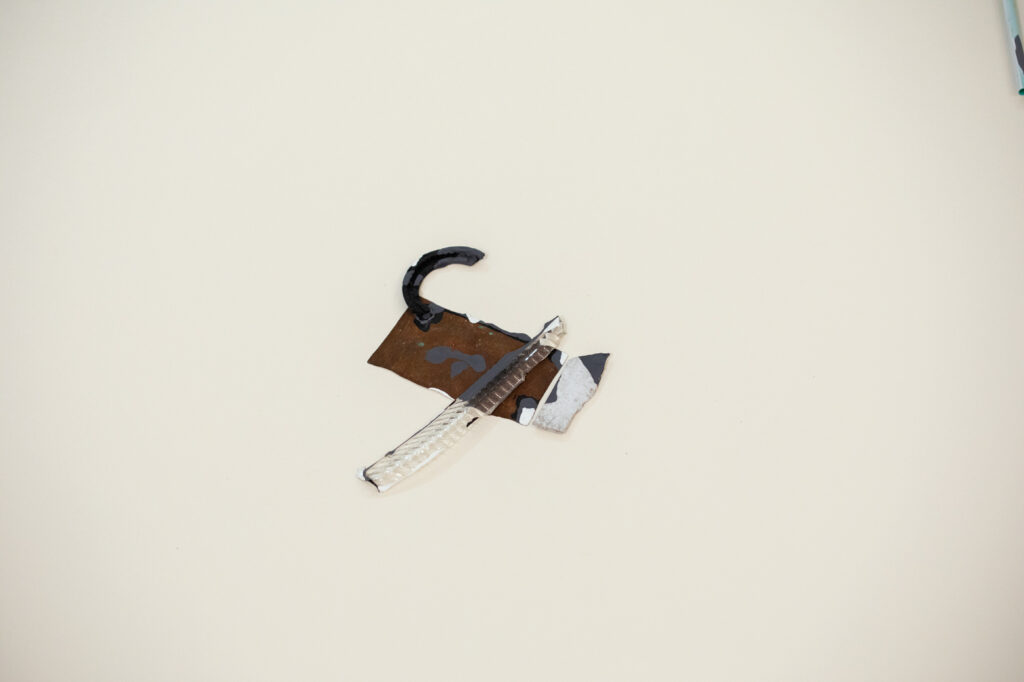
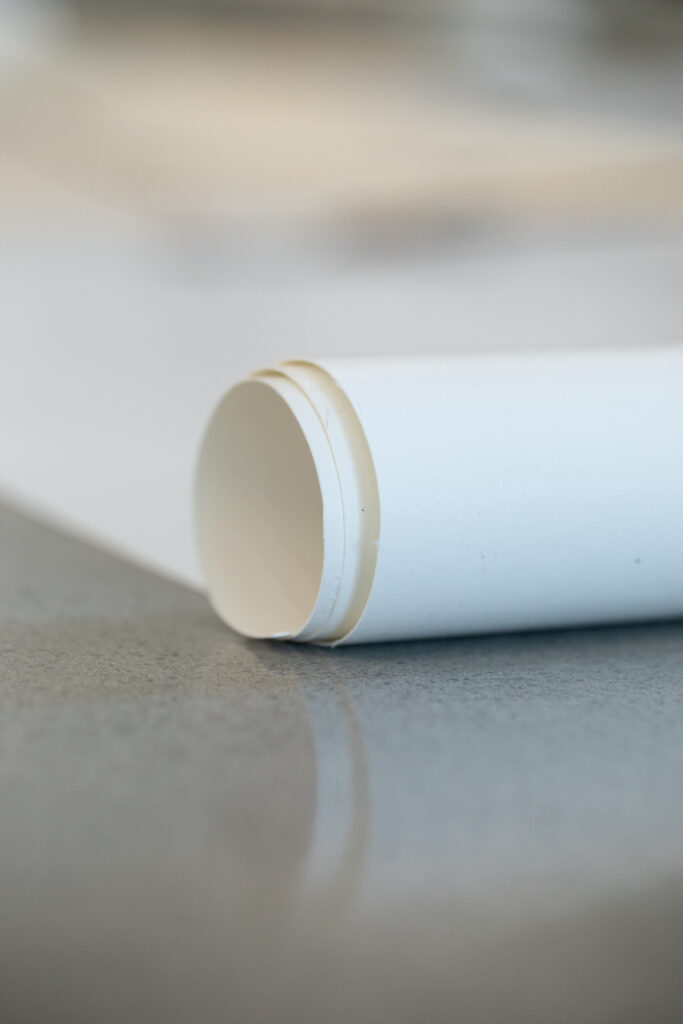
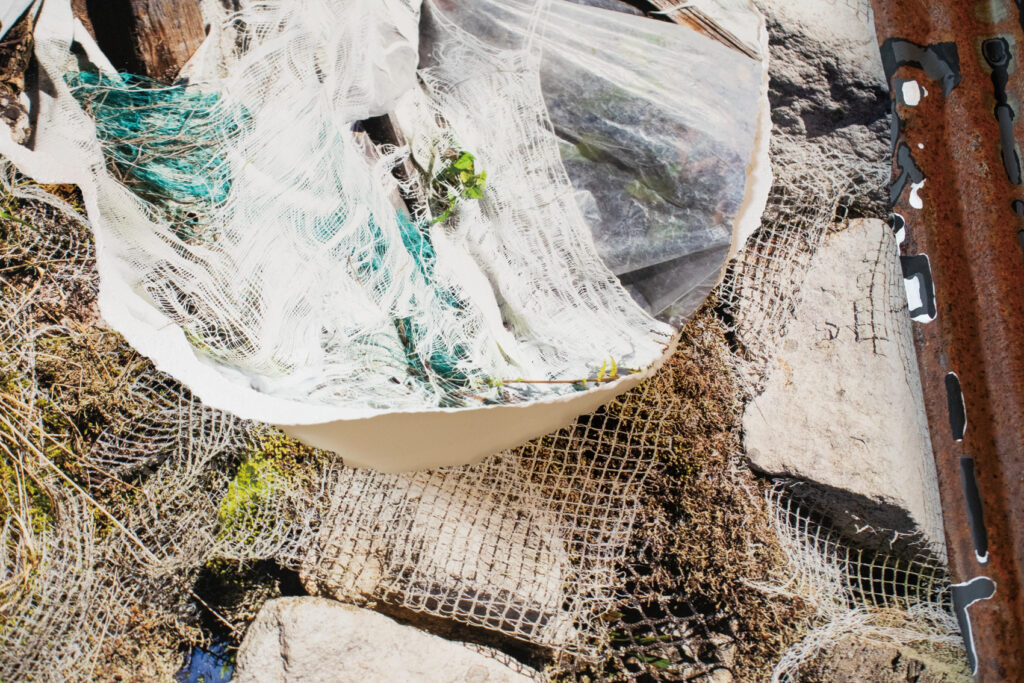
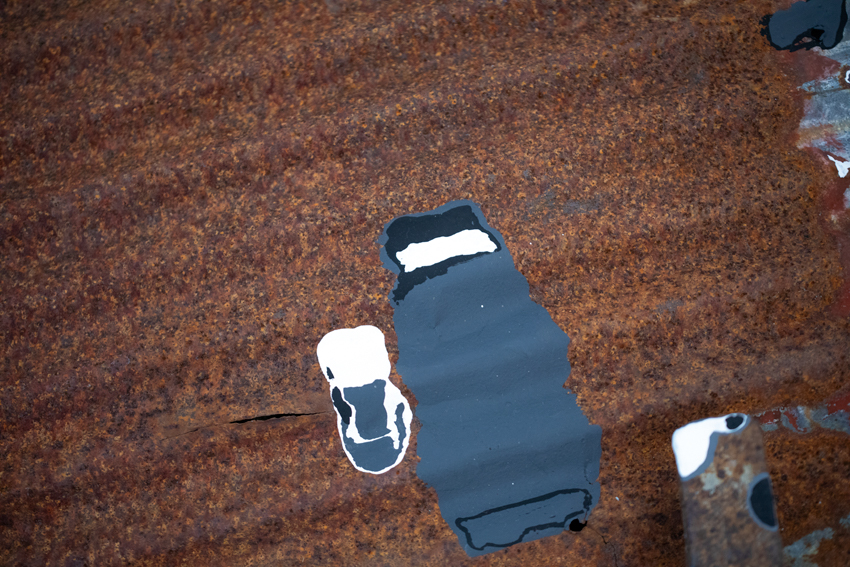
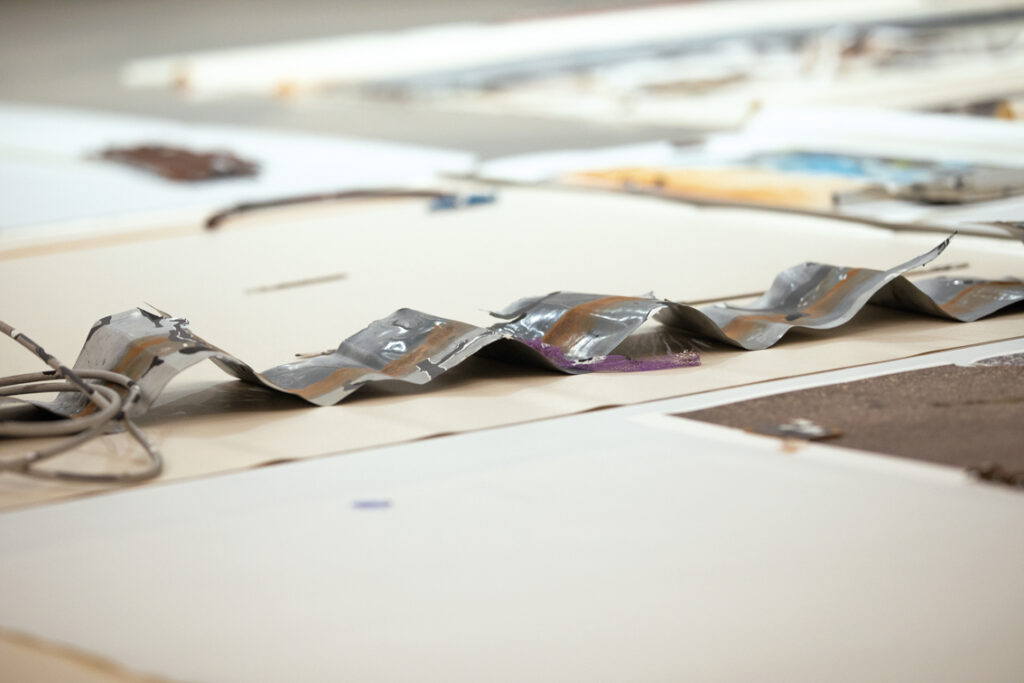
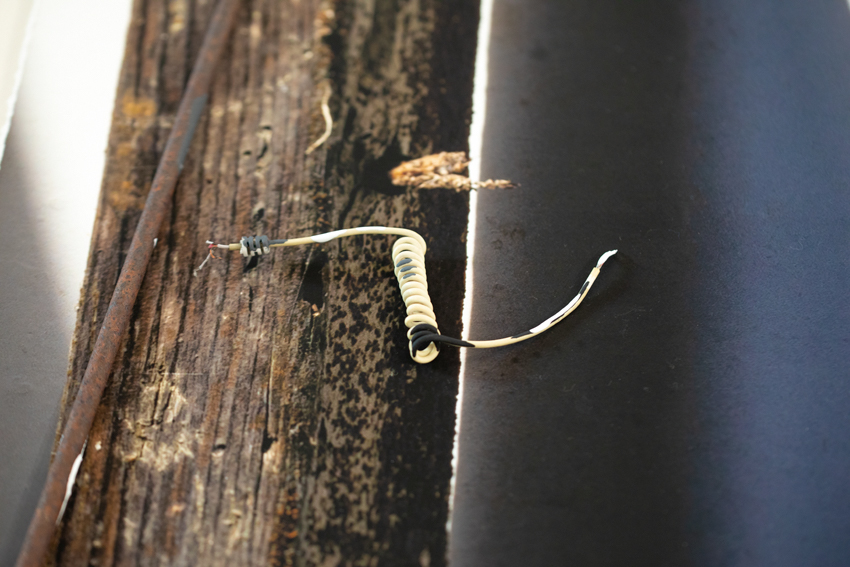
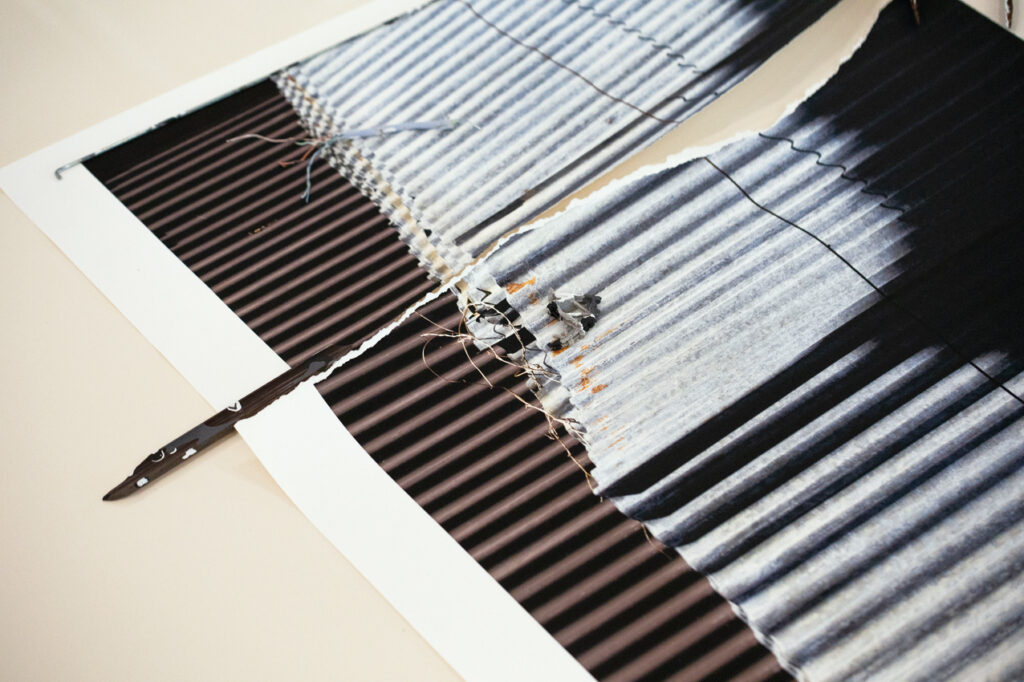
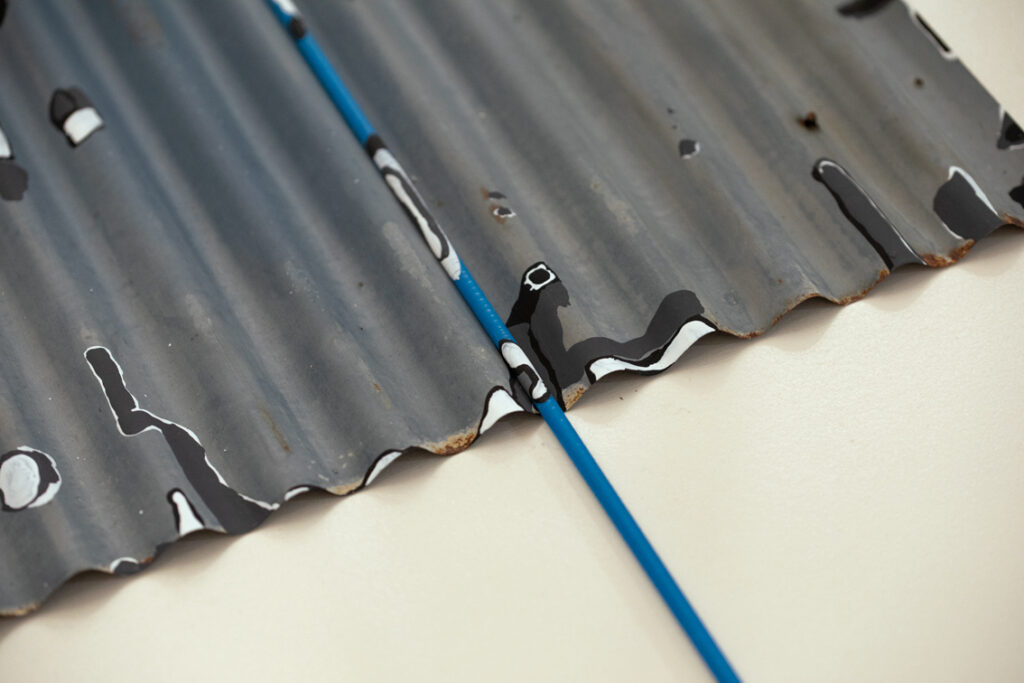
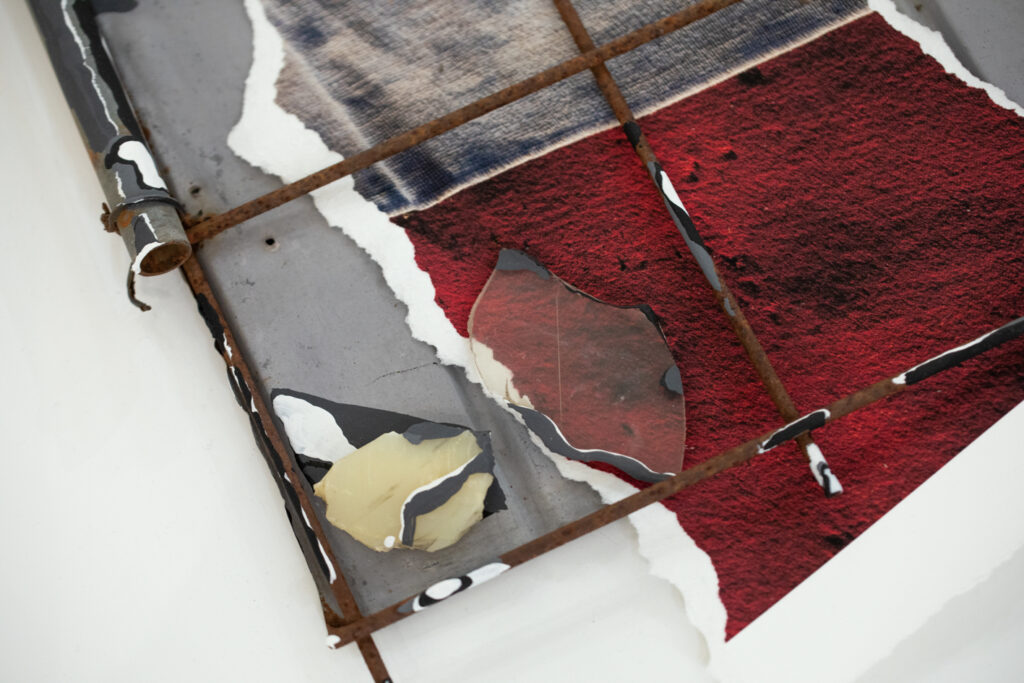
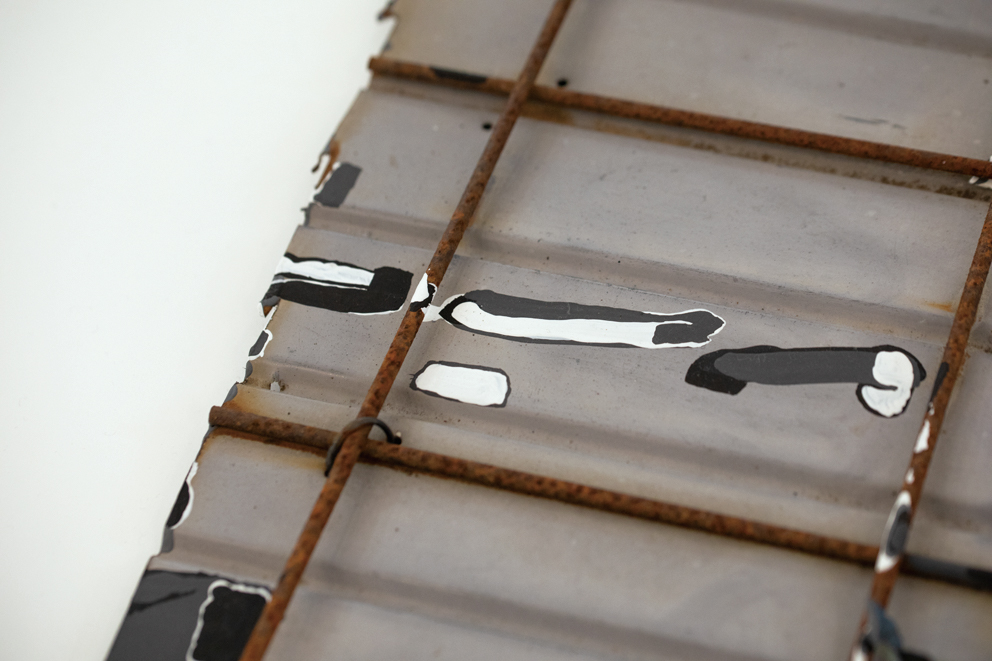
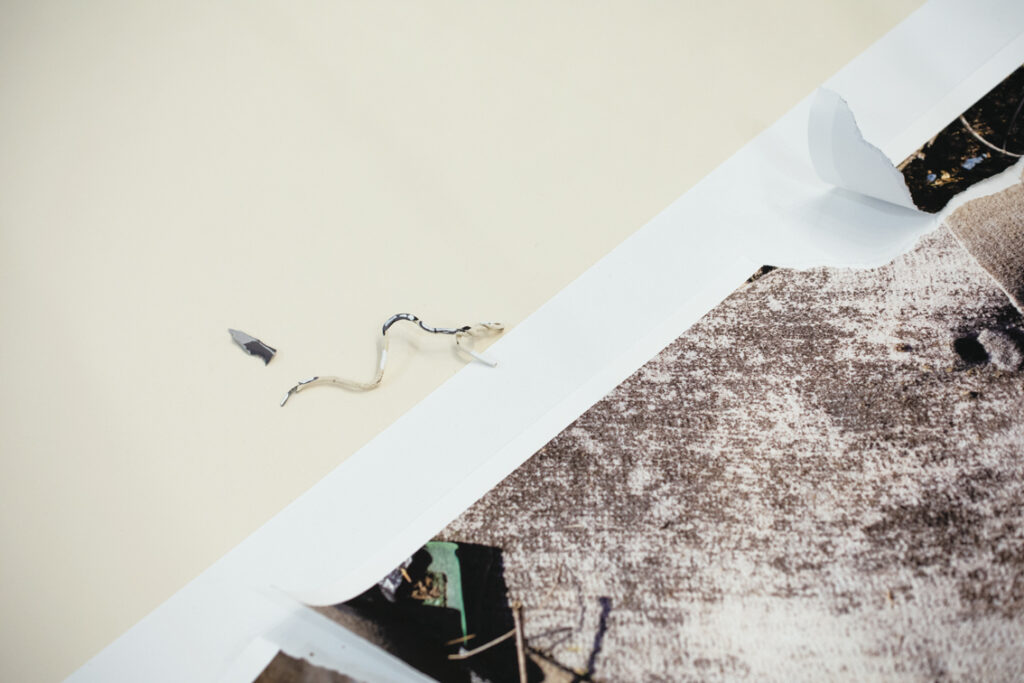
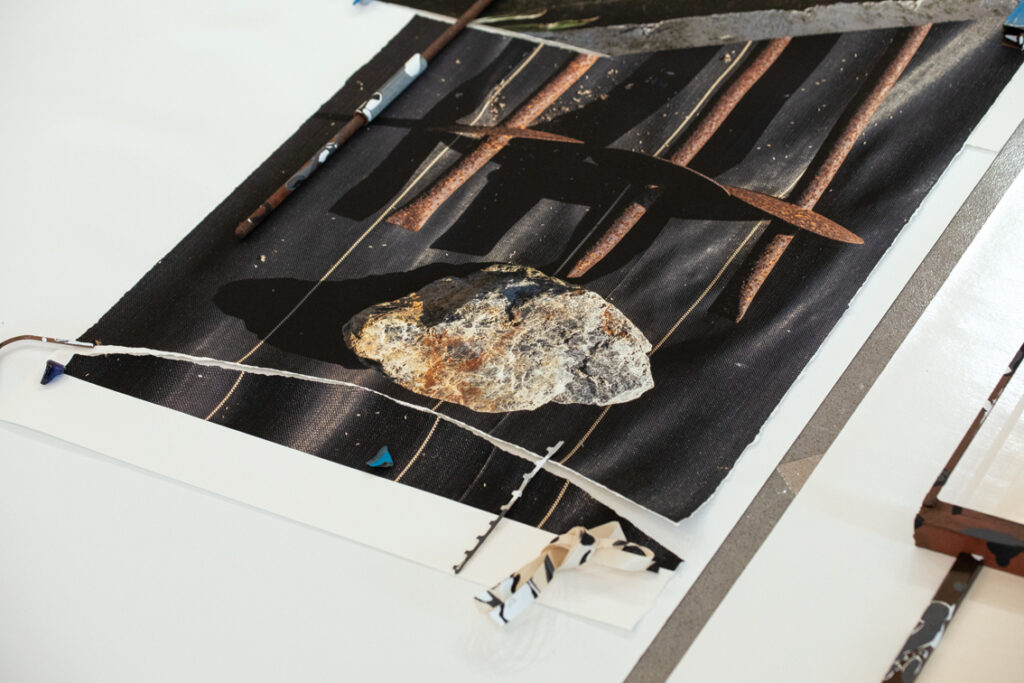
インスタレーション(インクジェットプリント、水性塗料、鉄、アルミ、トタン、ゴム、プラスチック、テント生地、他)
installation(Inkjet print, water-based paint, steel, aluminum, galvanized sheet metal, rubber, plastic, tent fabric, and other materials)
津高和一が描く抽象画と、私が普段から目にする道端に放置されるオブジェクト。そこに共通するのは、彼岸へ続く「穴」である。 戦地で極限まで死に接近した津高は、帰国後は一度死んだことにしてみて、今を生きることを考え続けた。 それは、彼岸から現在自分が立つ点を眺める意識を持って絵を描くことだった。抽象画を描く行為、1962-1981年に渡り毎年自庭で開催した個展、そしてプロとアマを混ぜながら夙川公園にテントを建てて行った「架空通信テント美術館」展。津高は、個人の生活と公的な空間を常に行き来した。《目の交換、視線の先、彼岸と此処との間を》は、画家:津高和一の目と髙橋の目を交換し、両者の目を間で交わされる感覚を造形化した作品である。
以下は、会場で配布したハンドアウトに掲載した「詩」である。 津高は、詩人でもあった。
会場ハンドアウト|download pdf
What Tsudaka Waichi’s abstract paintings and the objects I regularly encounter abandoned along the roadside have in common is a “hole” leading to the Other Shore.
Having come extremely close to death on the battlefield, Tsudaka returned to Japan and continued to think about how to live in the present by imagining that he had already died once. For him, painting meant looking at the point where he stood in the present with an awareness of seeing himself from the Other Shore.This perspective informed not only his practice of abstract painting, but also the solo exhibitions he held annually in his own garden from 1962 to 1981, and the Imaginary Correspondence Tent Art Museum exhibition, for which he erected tents in Shukugawa Park and brought together professional and amateur artists. Tsudaka continually moved back and forth between private life and public space.
Exchange of Eyes, Beyond the Gaze, Between the Other Shore and Here exchanges the eyes of the painter Tsudaka Waichi with those of Takahashi, giving form to a sensation that passes between their two ways of seeing.
撮影:飯川雄大|Photo:Takehiro Iikawa


